



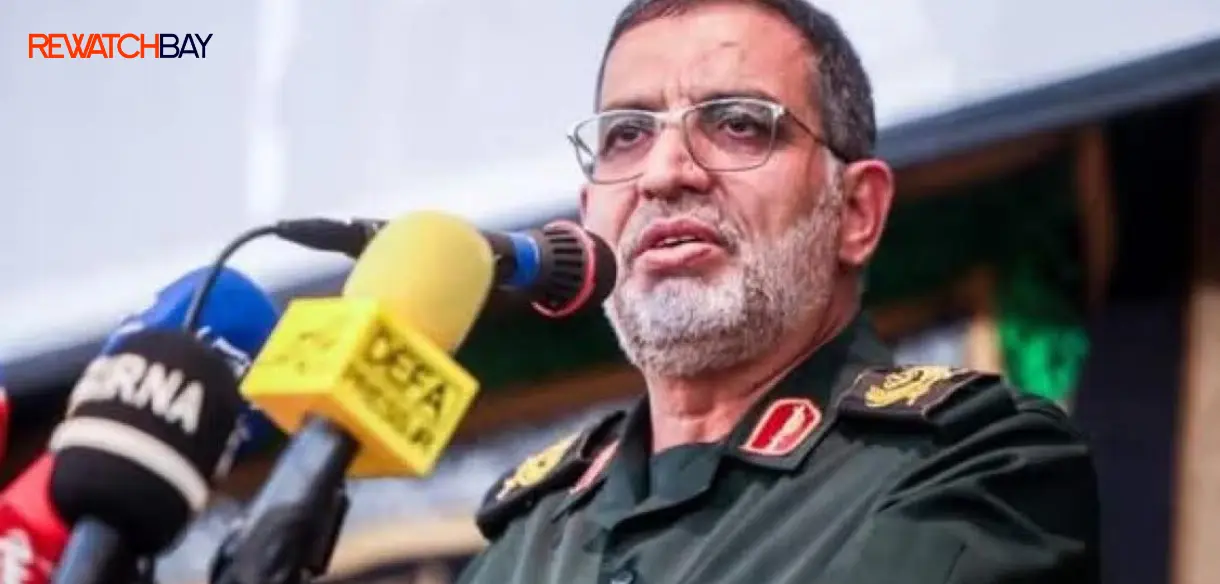
Ali Mohammad Naini was a senior commander and spokesperson for Iran’s Islamic Revolutionary Guard Corps (IRGC) who has been reported killed during recent strikes linked to the ongoing conflict between Iran, Israel, and the United States. His death marks one of the most significant losses for Iran’s military leadership during the current escalation in the Middle East.
Iranian state media confirmed that Naini was killed during airstrikes attributed to joint US-Israel operations. The development highlights the growing intensity of the war, where high-ranking military figures are increasingly being targeted.
Senior IRGC Leader and Public Voice of the Guard
Ali Mohammad Naini held the rank of Second Brigadier General in the Islamic Revolutionary Guard Corps. In 2024 he was appointed as the official spokesperson of the IRGC as well as the deputy head of its public relations division.
In this position, he became one of the main figures responsible for communicating the Guard’s military and strategic messaging. His role placed him at the center of information campaigns during times of conflict and political tension.
Naini was widely regarded inside Iran as a specialist in psychological operations, soft power strategy, and information warfare. His public statements often reflected the IRGC’s broader military narrative and political stance during international confrontations.
Career Spanning More Than Four Decades
Ali Mohammad Naini’s military career extended for more than 40 years. He joined the IRGC during the early years of the Islamic Republic and served in several influential positions within the organization.
One of the defining periods of his career was the Iran–Iraq War, where he took part in combat operations and was wounded in action. That experience helped establish his reputation within Iran’s military circles.
Over the years he also held leadership roles connected to the IRGC and the Basij, focusing on cultural strategy and political messaging.
Key details about Ali Mohammad Naini’s background are summarized below.
| Aspect | Details |
|---|---|
| Full Name | Ali Mohammad Naini |
| Birth Year | 1957 |
| Birthplace | Kashan, Iran |
| Military Rank | Second Brigadier General |
| Organization | Islamic Revolutionary Guard Corps (IRGC) |
| Role | Spokesperson and Deputy Head of Public Relations |
| Appointment | 2024 under IRGC Commander Hossein Salami |
Academic and Strategic Influence
Beyond his military duties, Naini also had an academic background. He served as a professor in the field of social sciences and was associated with Imam Hossein University, an institution linked to the Revolutionary Guard.
His work focused on strategic communication, influence operations, and political messaging, making him both a military official and an intellectual voice within the IRGC system.
This dual role allowed him to influence both operational strategy and the public narrative surrounding Iran’s military policies.
Death Signals Deeper Targeting of Iranian Leadership
The killing of Ali Mohammad Naini reflects a broader shift in the conflict. Recent strikes have reportedly targeted several high-level Iranian officials, indicating a strategy focused on weakening leadership within the country’s military and security structure.
His death follows the reported killings of other senior figures within Iran’s political and security establishment. These developments show how the conflict has moved beyond battlefield exchanges to include direct strikes against leadership figures.
The pattern suggests an intensifying confrontation that could further reshape the balance of power in the region.
Conflict Escalates Across the Middle East
The war has already expanded beyond isolated clashes, affecting several countries across the region. Military exchanges, drone strikes, and attacks on energy infrastructure have increased tensions throughout the Middle East.
Several key developments have been reported during the conflict, including attacks on oil facilities, drone strikes on refineries, and military actions involving multiple countries.
The war has also impacted global markets, with energy prices rising sharply due to fears of supply disruption and broader instability.
Impact on Regional Security and Global Markets
The escalating conflict has created ripple effects far beyond the battlefield. Oil prices surged sharply during the early stages of the war as traders reacted to threats against energy infrastructure and shipping routes.
At the same time, global markets have experienced volatility as governments and investors respond to the uncertainty created by the conflict.
The death of high-ranking figures like Ali Mohammad Naini adds another layer of tension, as such events often trigger further retaliation or strategic responses.
Why Ali Mohammad Naini Was an Important Figure
Ali Mohammad Naini played a key role in shaping how Iran communicated its military strategy to both domestic and international audiences. As the spokesperson of the IRGC, he was responsible for explaining military actions, defending Iran’s policies, and responding to foreign criticism.
His expertise in strategic messaging and influence operations made him one of the most visible figures within the Revolutionary Guard’s leadership.
The loss of such a figure could have both symbolic and operational implications for the organization.
What Happens Next
With the conflict continuing to expand and leadership figures becoming targets, the situation in the Middle East remains highly uncertain. Military developments, political decisions, and diplomatic reactions will likely shape the next phase of the crisis.
The killing of Ali Mohammad Naini highlights how deeply the confrontation has reached into the leadership structures of the region’s major military forces.
As the war enters another critical stage, global attention remains focused on how both sides respond to these escalating developments.